This monument in Cividale del Friuli commemorates Julius Caesar, who founded the city in 50 BC. Its founding name was Forum Iulli. The name of the area of modern Friuli originates from this ancient city name.
Browse through your travel destination!

This monument in Cividale del Friuli commemorates Julius Caesar, who founded the city in 50 BC. Its founding name was Forum Iulli. The name of the area of modern Friuli originates from this ancient city name.

The Karlsruhe Pyramid was constructed between 1823 and 1825 according to plans by architect Friedrich Weinbrenner. It commemorates Karl III Wilhelm Margrave of Baden-Durlach, the founder of the planned city of Karlsruhe.

The Museum of Military History (Heeresgeschichtliches Museum) in Vienna is an architectural gem. So you find architecture in the style of Byzantine as well as Neo-Gothic. Some details may made you think of being in Venice.

A protective building in the style of an ancient Roman sanctuary shelters the remains of the Mithras Shrine III in Ptuj. The shrine was erected in the sixties of the 3rd century by soldiers of the Legio XIII Gemina.

The Jahrhunderthalle is a venue for such famous events like the Ruhrtriennale. Interesting detail: The hall was constructed on top of an existing plant. After that, the soil was risen up to the level of the hall. So the first plant became part of the basement.

The Traunsee is the deepest lake in Austria (191 metres) and offers lovely views of high mountains and even an old castle set on a tiny island (Seeschloss Ort). You find this lake in the Salzkammergut region between Gmunden and Ebensee.

The Canal Grande is the heart of the Borgo Teresiano district, commissioned by the Austrian Empress Maria Theresa. The neoclassical building at the end of the canal is a Catholic Church (Sant’Antonio Nuovo).

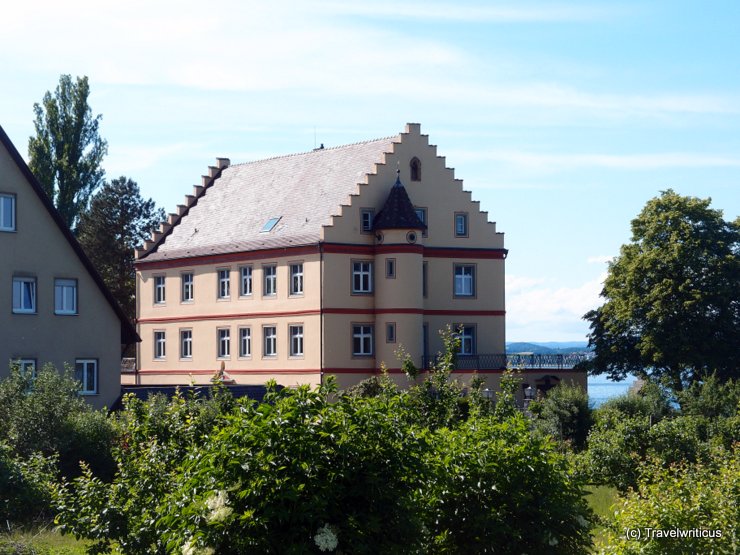
Meersburg, a place on the shore of Lake Constance, offers in one of its houses a Zeppelin Museum. This private collection and the large Zeppelin Museum in nearby Friedrichshafen would be a good combination for friends of the big airships.

This Art Nouveau pavilion dates back to 1898. Architect Otto Wagner designed it as a station building for the Viennese Metropolitan Railway (Wiener Stadtbahn). Today, the Otto Wagner Pavillon houses a museum about this famous urban planner.

The railway museum in Trieste offers a charm of its own. The old locomotives and waggon stand inside the former station hall, which has lost its roof. That way, it is an open-air museum now.

In the streets of Constance (Konstanz), you may see this depiction of a three-headed peacock. Each head wore a tiara. What is the meaning of this strange combination? It is an allusion to the Three Popes Controversy.

This mural tells about the Sister Cities of Graz. You find it near the Schloßberg Museum on top of the hill (Schloßberg) in the middle of the Styrian capital. Today, it isn’t up-to-date. For example, it doesn’t mention Ljubljana that joined this group in 2001.