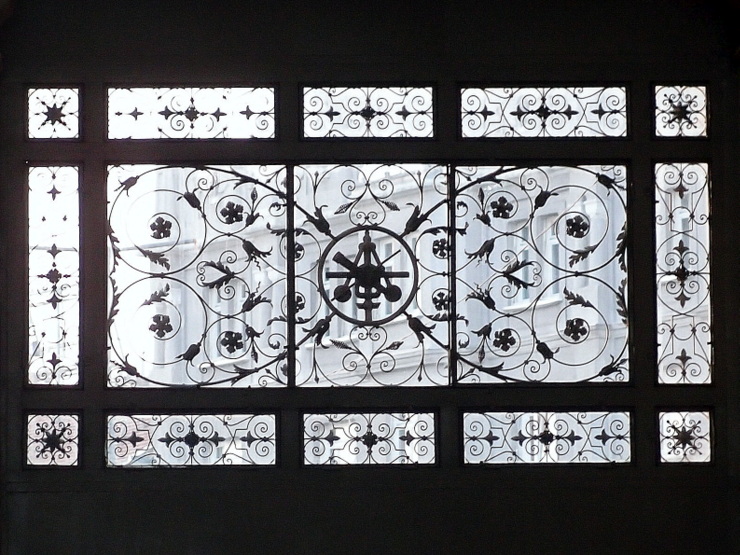
Sometimes, the window is the view! There are still many old and atmospheric elements in the architecture of the Budapest Keleti Station (Budapest Keleti pályaudvar) in Hungary. You find this smithery in the main entrance of the train shed.
Browse through your travel destination!
Sometimes, the window is the view! There are still many old and atmospheric elements in the architecture of the Budapest Keleti Station (Budapest Keleti pályaudvar) in Hungary. You find this smithery in the main entrance of the train shed.
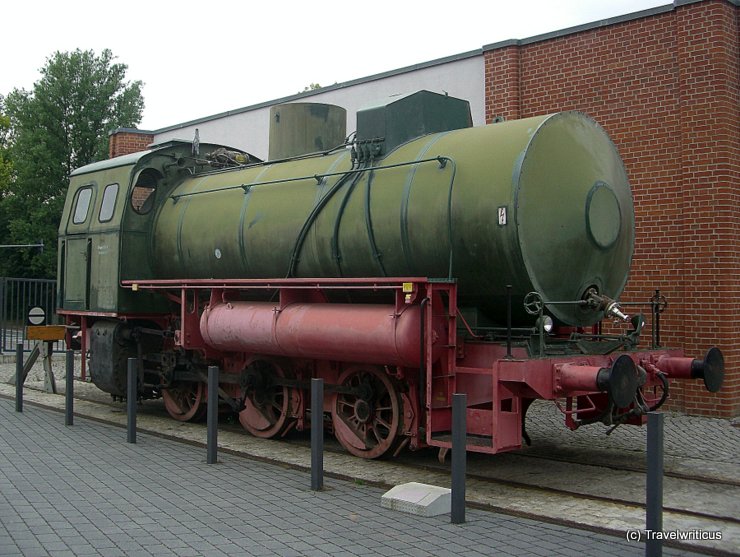
At the Saxon Museum of Industry (Sächsische Industriemuseum) in Chemnitz, you see this fireless steam locomotive. Industrial facilities where no open fire was allowed used this kind of locomotive.
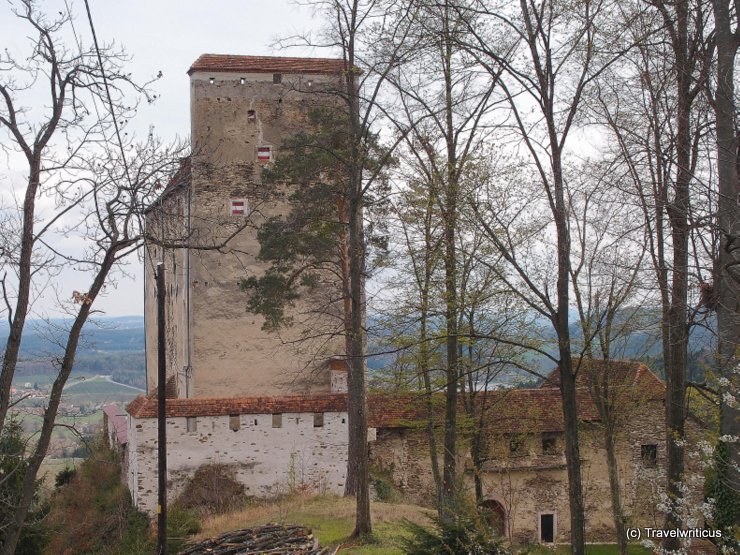
Neuhaus Castle (Burg Neuhaus) stands in a forest near the Styrian place of Stubenberg am See. The owner offers tower apartments for holidays near Stubenberg Lake.
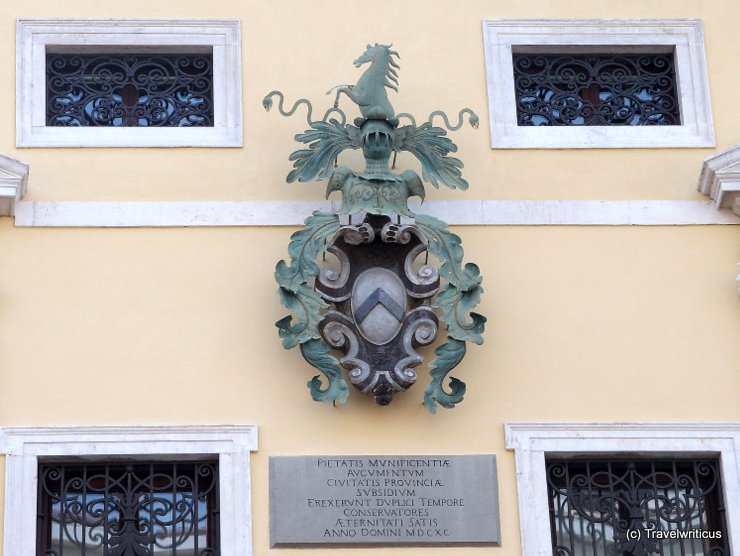
While strolling through the streets of Udine, you may see this lively depiction of the local coat of arms. This version of the city arms of Udine makes a fascinating difference as it forms a sort of sculpture instead of the common reliefs and murals.
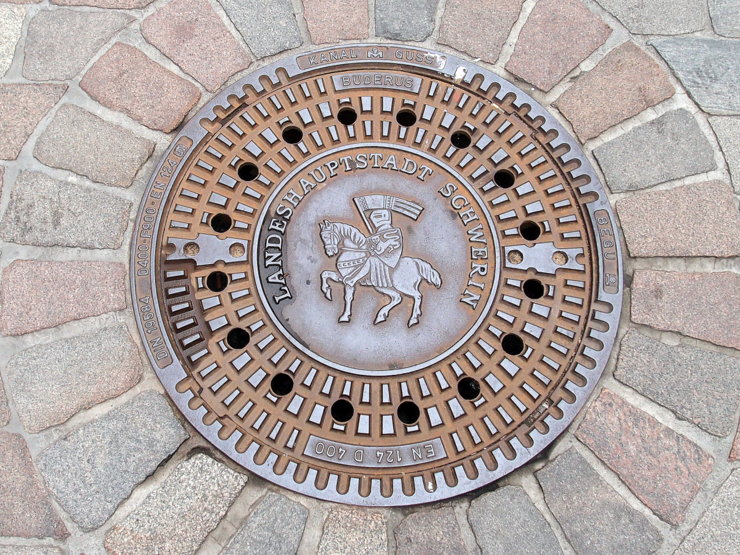
The capital city (LANDESHAUPTSTADT) of Mecklenburg-Vorpommern is SCHWERIN. The manhole covers in Schwerin show the city arms in the version of 1991. The depicted knight represents Henry the Lion (Heinrich der Löwe).
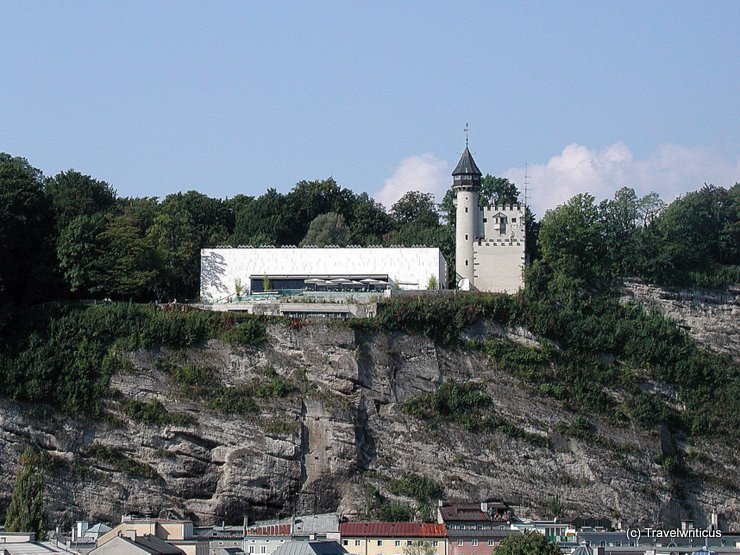
While walking through Salzburg, I took this photo of the Museum der Moderne (Museum of Contemporary Art) high over the city on top of the Mönchsberg. The castle-like building next to the museum is a water tower.
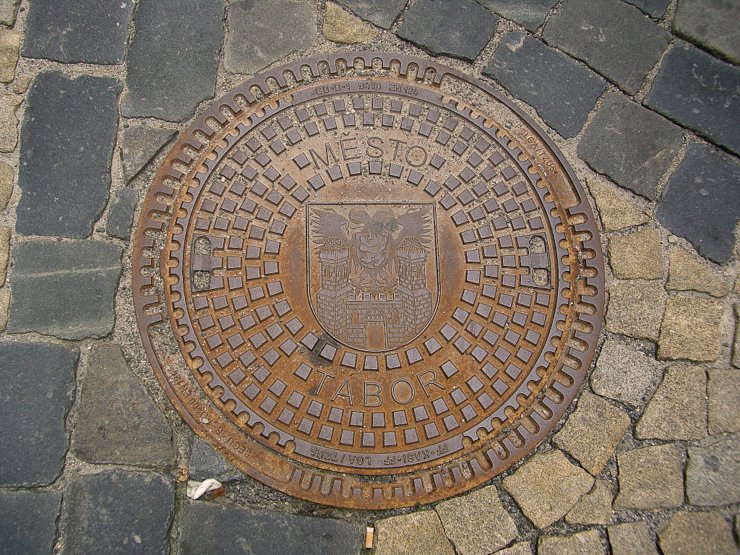
This manhole cover in Tabor displays the local city arms. Sigismund of Luxembourg granted this coat of arms in 1437. At that time, the Lion of Luxembourg was part of the inescutcheon. Today, you find the Bohemian Lion in the city’s arms.
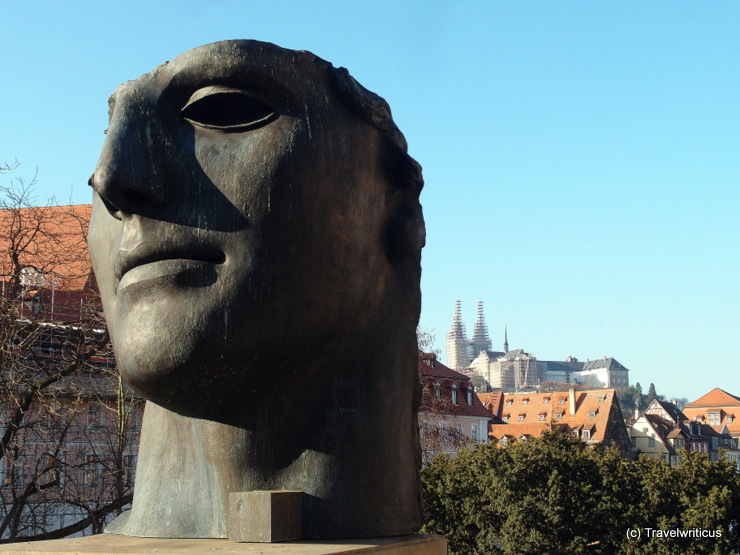
Polish artist Igor Mitoraj created this sculpture named Centurione I in 1987. It stands near the Old Town Hall on the Lower Bridge in Bamberg. In the background, you see Michelsberg Abbey.
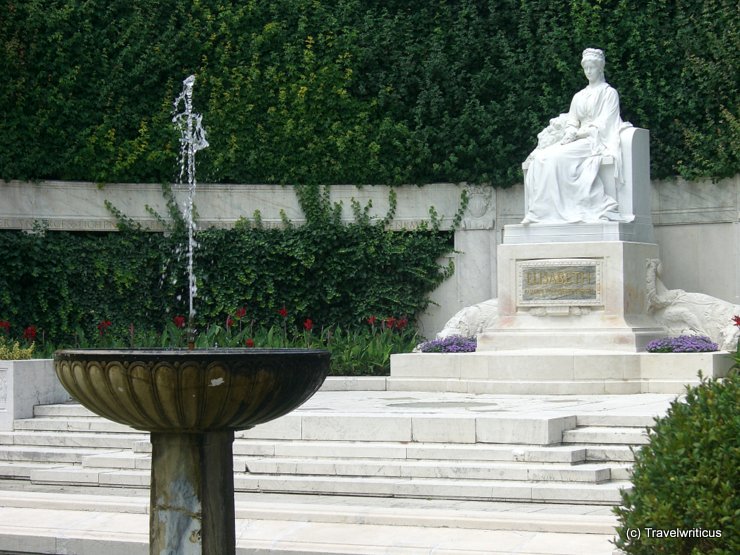
This monument to Empress Elisabeth “Sisi” of Austria stands in the Volksgarten in the 1st district of Vienna. Friedrich Ohmann designed the monument. Hans Bitterlich created the statue.
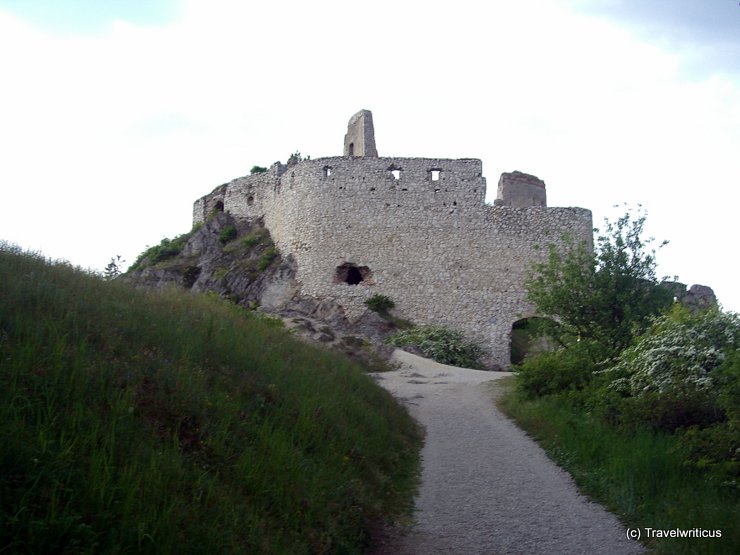
Čachtice Castle (Čachtický hrad) was the residence and later the prison of “Blood Countess” Erzsébet Báthory. She became imprisoned after having been accused of being a serial murderer. She died there in the year 1614.
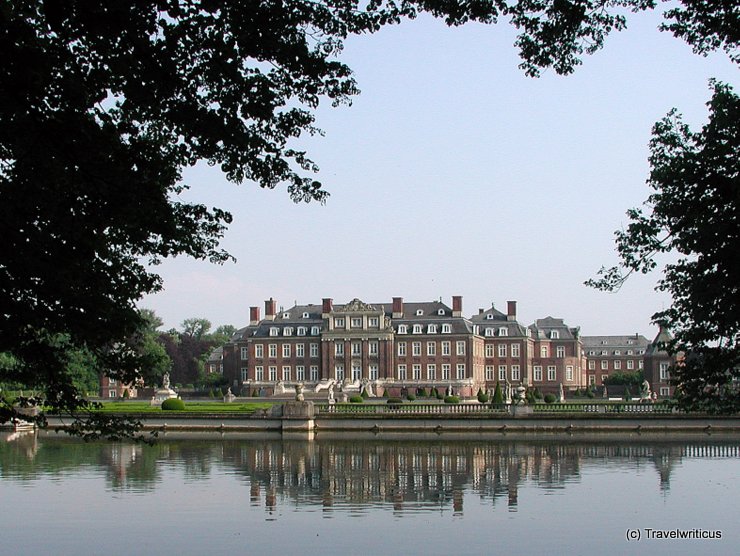
Nordkirchen Castle (Schloss Nordkirchen) is the largest palace with a moat in the region of Westphalia. The present palace, also known as “Versailles of Westphalia”, dates back to the 18th century.
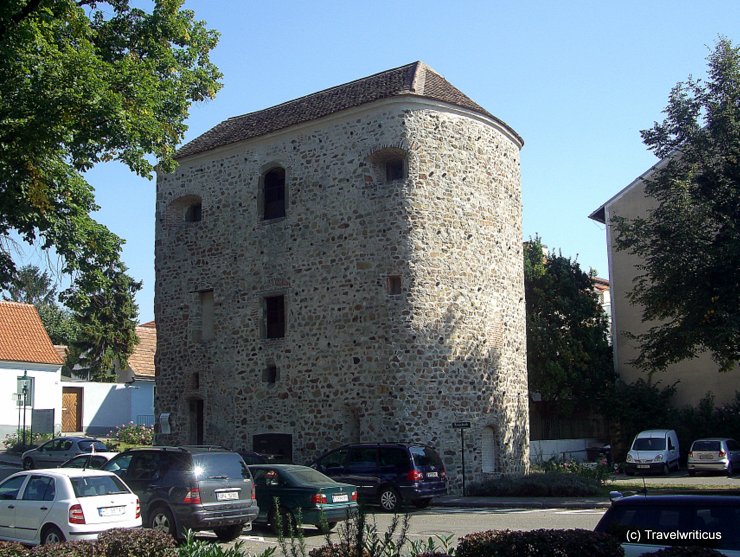
The Horseshoe Tower (Hufeisenturm) in Tulln remains from the ancient military camp Comagena. The Roman name originated from an equestrian unit descending from the region of Commagena.