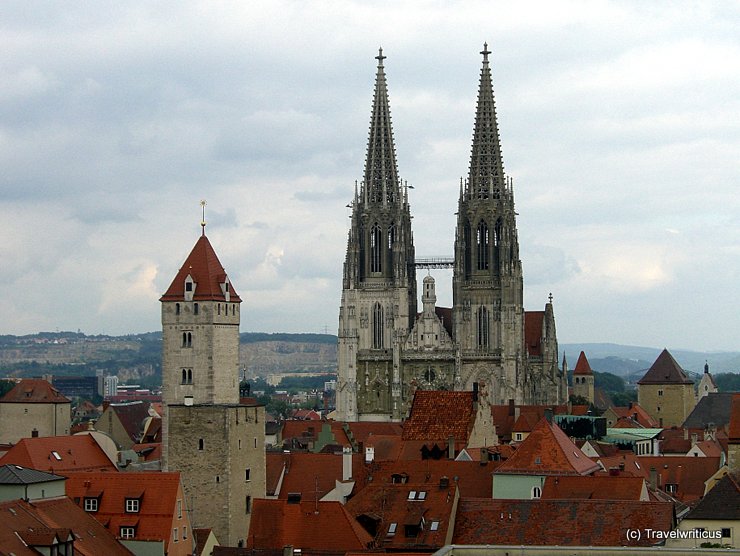
This is a view of the Bavarian city of Regensburg taken from the steeple of the Holy Trinity Church (Dreieinigkeitskirche). Regensburg is known for several family towers (Geschlechtertürme), similar to those in San Gimignano, Italy.
Browse through your travel destination!
This is a view of the Bavarian city of Regensburg taken from the steeple of the Holy Trinity Church (Dreieinigkeitskirche). Regensburg is known for several family towers (Geschlechtertürme), similar to those in San Gimignano, Italy.
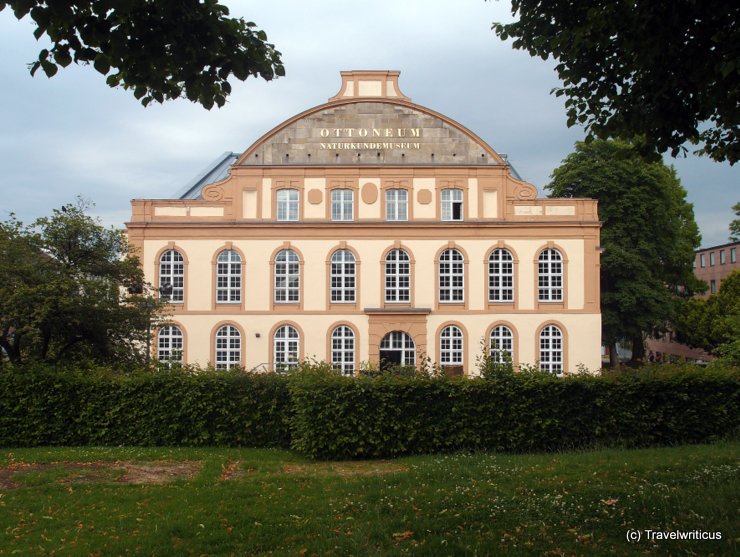
A museum with intriguing architecture forms the Museum of Natural History known as Ottoneum. Inside, it offers goodies like a Xylotheque and the Ratzenberger Herbarium. Another attraction is the Goethe Elephant Skeleton.
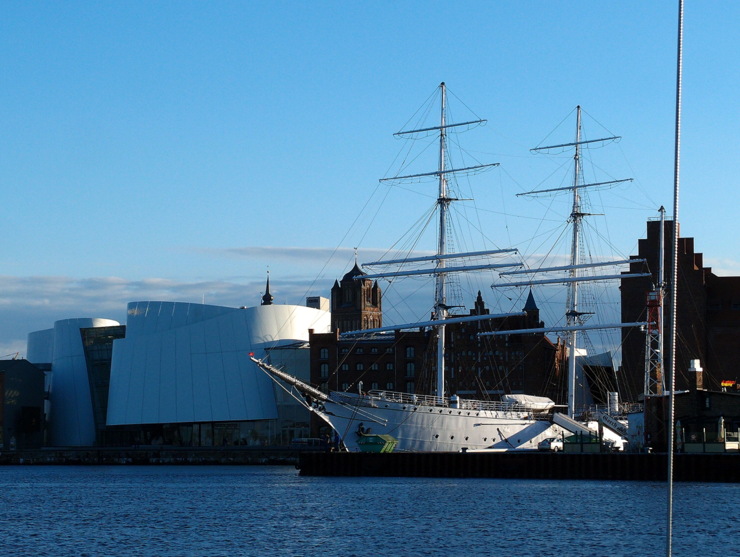
The Gorch Fock I dates back to 1933. Before WWII, it served as a school ship for the German Reichsmarine. Today, it is a museum ship in Stralsund. Its name refers to the author Johann Wilhelm Kinau, who used the pseudonym Gorch Fock for his works.
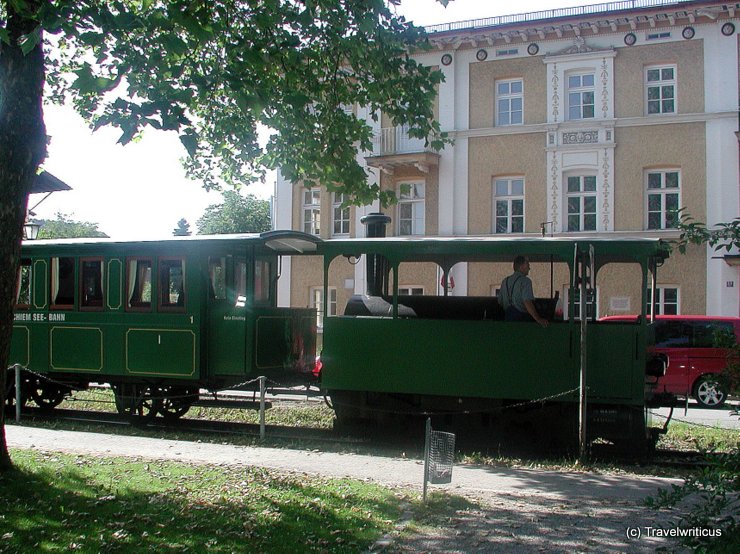
The Chiemsee Railway (Chiemseebahn) was opened in 1887. Though it doesn’t exactly meet the definition of a tramway, it is considered the oldest steam tramway in the world still in use. It connects Prien Railway Station with Prien Port on the Chiemsee.
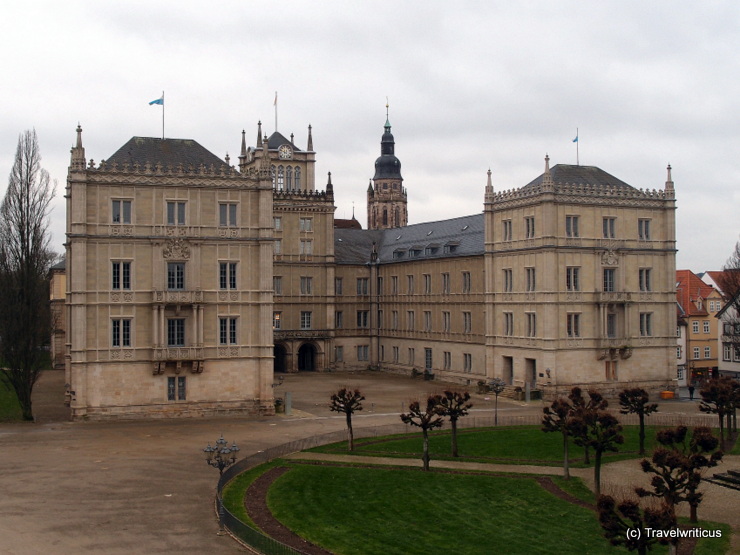
Ehrenburg Palace (Schloss Ehrenburg) was the residential palace of the dukes of Saxe-Coburg until 1918. Its present façade in the English Gothic Revival style is a work by Karl Friedrich Schinkel at the beginning of the 19th century.
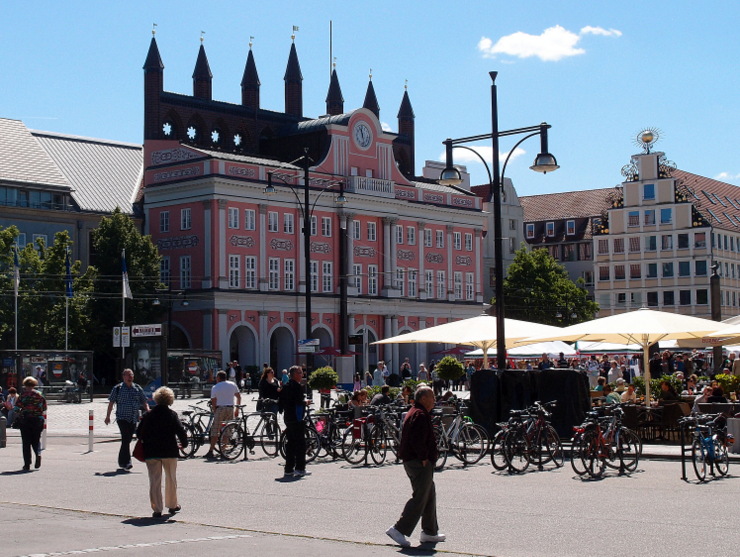
The city hall of Rostock on the Neue Markt square dates back to the 13th century. Its architecture is a mixture of two styles. A Baroque porch expanded the Gothic building in the 18th century.
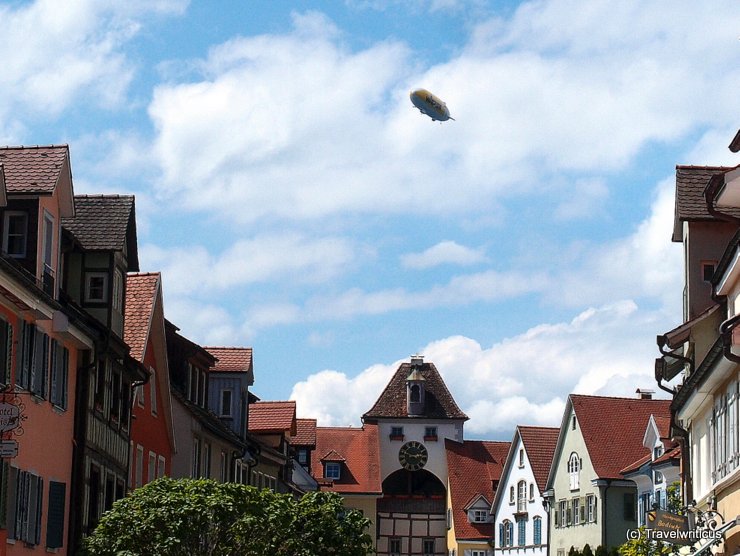
Sometimes, you see a modern airship high over the region of Lake Constance. For example, this pic shows such a piece about Meersburg. The reason is simple. Several nearby companies offer sightseeing flights over Lake Constance.
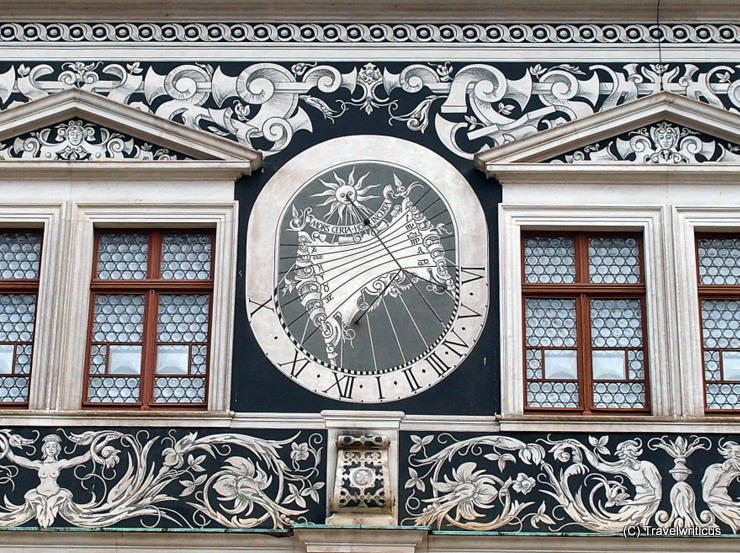
You find this sundial on a building along the Stallhof in Dresden. The Stallhof is a court of the Dresden Castle (Dresdner Residenzschloss). It formed a venue for tournaments in earlier times.
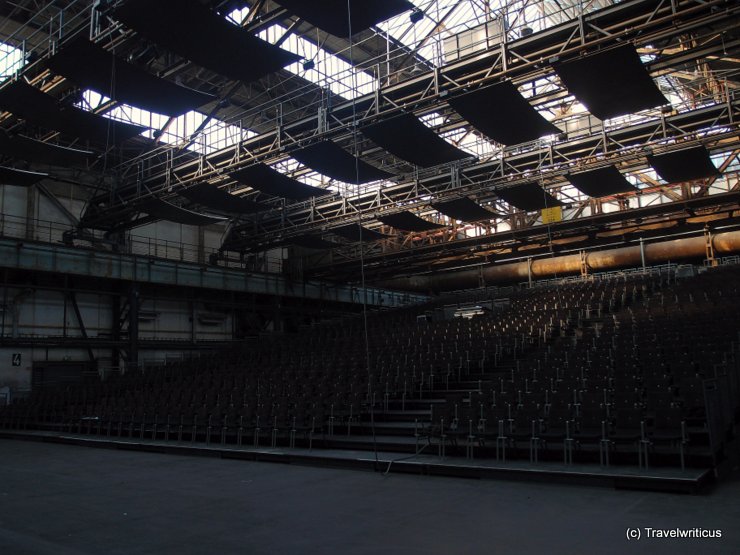
The Ruhrtriennale is an annual music and arts festival in the Ruhr area of Germany. You find its venues in industrial heritage sites like the Jahrhunderthalle in Bochum (Picture), the Zeche Zollverein, and the Landschaftspark Duisburg-Nord.
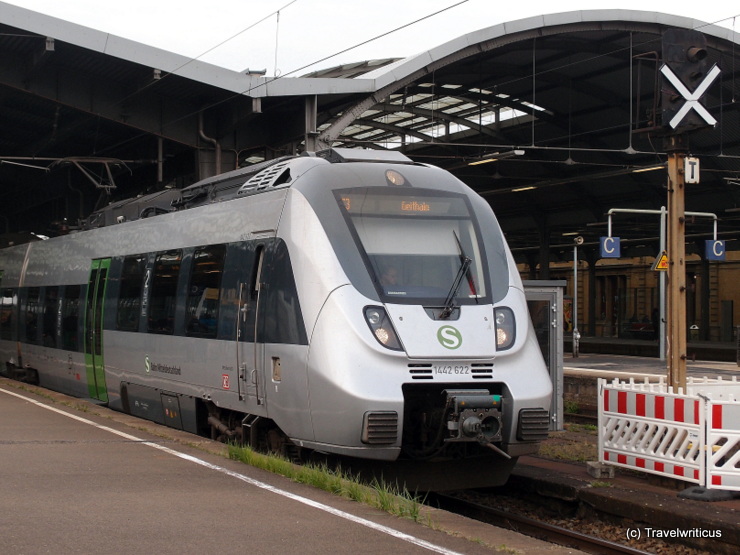
The Talent 2 is a multiple-unit railcar manufactured by Bombardier Transportation. The first trains have been operating since 2008. Its particular cab design led to the German nickname Hamsterbacke (hamster cheek). The depicted train runs for the S-Bahn Mitteldeutschland.
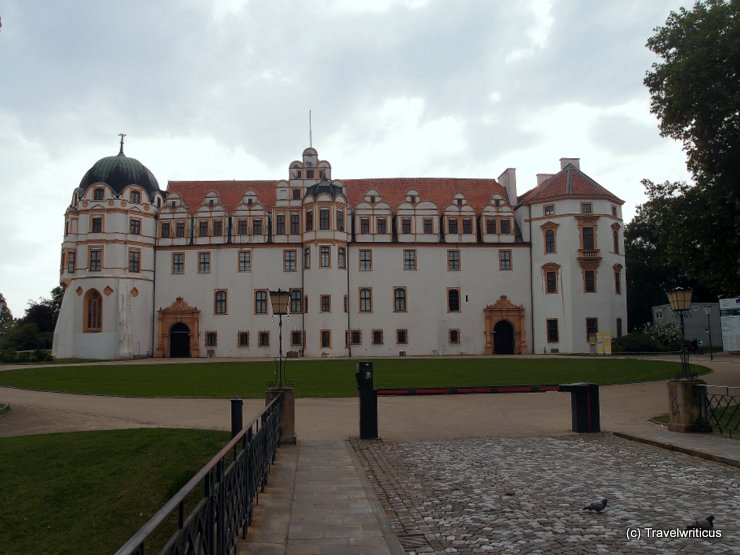
Schloss Celle in Lower Saxony blends Renaissance and Baroque styles, evolving from a 13th-century fortress into a Brunswick-Lüneburg residence. Visitors can explore the Residenzmuseum, chapel, and theatre, reflecting over 700 years of cultural history.
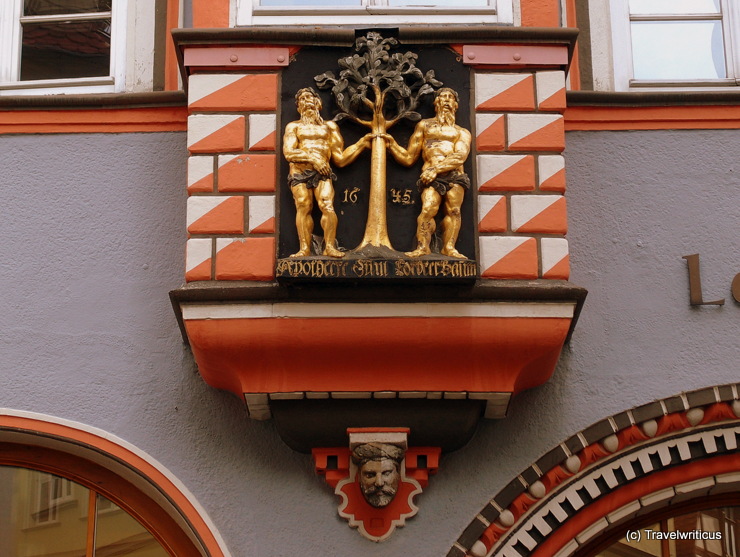
This relief displaying a laurel tree and two men is fixed at a 16th-century building with the address Herrenstraße 2 in Naumburg (Saale). The building houses a pharmacy named Lorbeerbaum Apotheke (Laurel Tree Pharmacy).