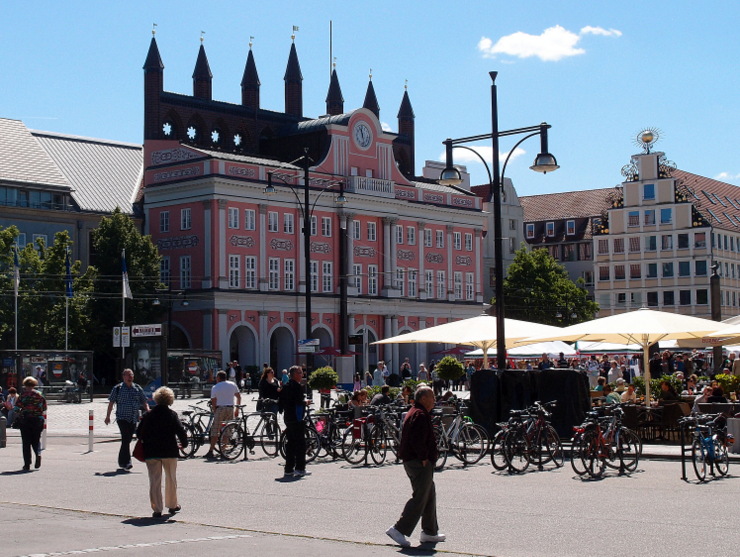
The city hall of Rostock on the Neue Markt square dates back to the 13th century. Its architecture is a mixture of two styles. A Baroque porch expanded the Gothic building in the 18th century.
Browse through your travel destination!
The city hall of Rostock on the Neue Markt square dates back to the 13th century. Its architecture is a mixture of two styles. A Baroque porch expanded the Gothic building in the 18th century.
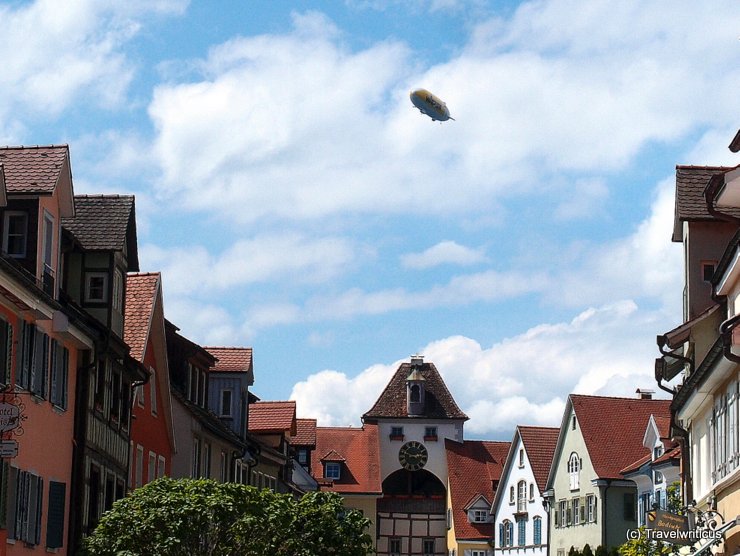
Sometimes, you see a modern airship high over the region of Lake Constance. For example, this pic shows such a piece about Meersburg. The reason is simple. Several nearby companies offer sightseeing flights over Lake Constance.
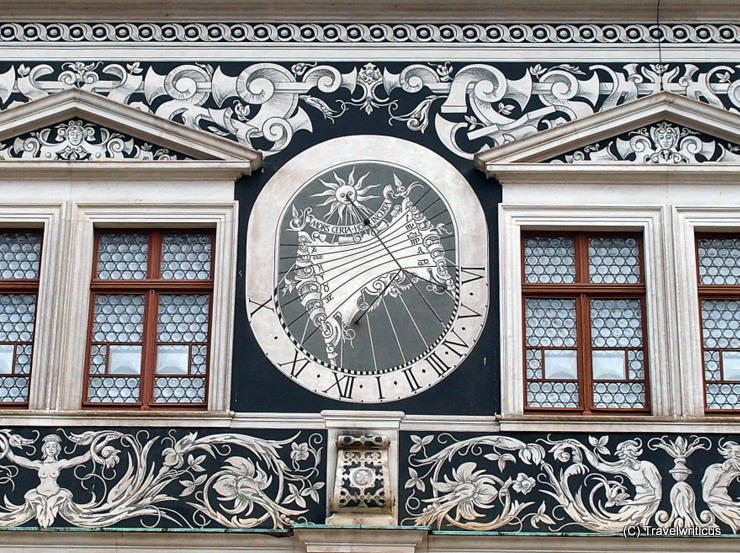
You find this sundial on a building along the Stallhof in Dresden. The Stallhof is a court of the Dresden Castle (Dresdner Residenzschloss). It formed a venue for tournaments in earlier times.
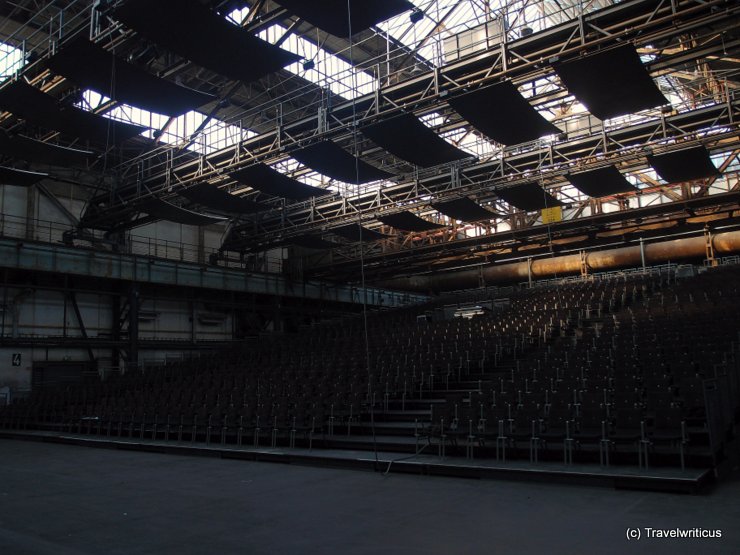
The Ruhrtriennale is an annual music and arts festival in the Ruhr area of Germany. You find its venues in industrial heritage sites like the Jahrhunderthalle in Bochum (Picture), the Zeche Zollverein, and the Landschaftspark Duisburg-Nord.
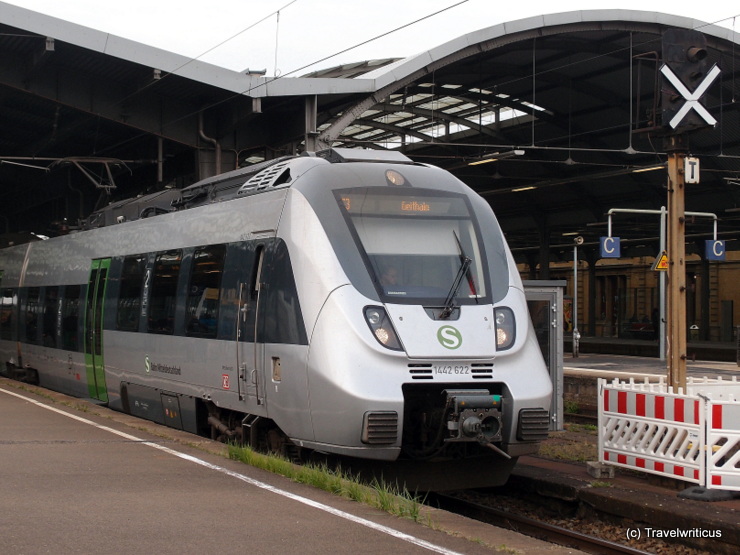
The Talent 2 is a multiple-unit railcar manufactured by Bombardier Transportation. The first trains have been operating since 2008. Its particular cab design led to the German nickname Hamsterbacke (hamster cheek). The depicted train runs for the S-Bahn Mitteldeutschland.
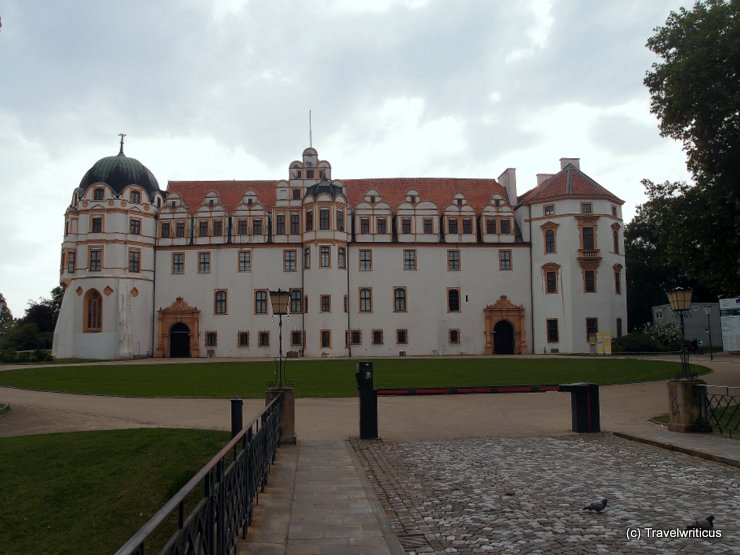
Schloss Celle in Lower Saxony blends Renaissance and Baroque styles, evolving from a 13th-century fortress into a Brunswick-Lüneburg residence. Visitors can explore the Residenzmuseum, chapel, and theatre, reflecting over 700 years of cultural history.
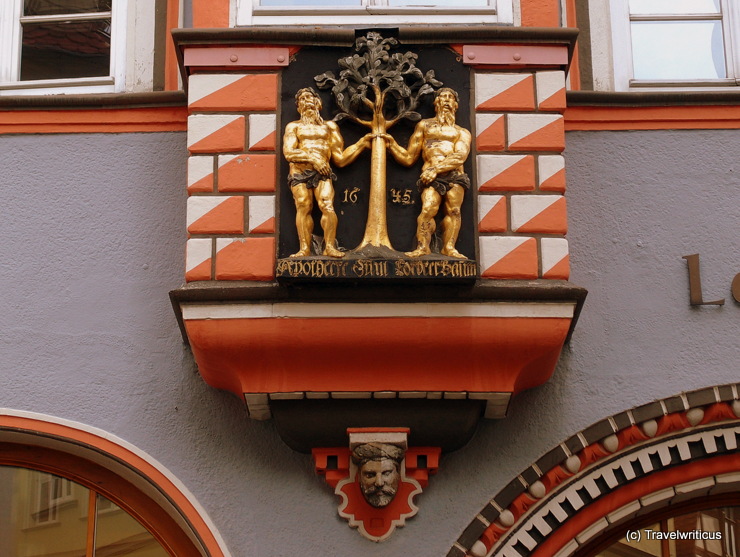
This relief displaying a laurel tree and two men is fixed at a 16th-century building with the address Herrenstraße 2 in Naumburg (Saale). The building houses a pharmacy named Lorbeerbaum Apotheke (Laurel Tree Pharmacy).
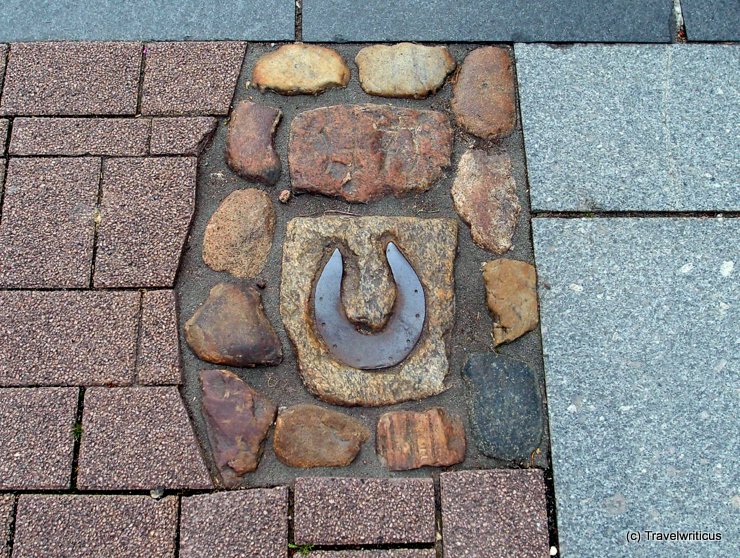
A horseshoe on the Stechbahn in Celle indicates the death place of Otto V, Duke of Brunswick-Lüneburg. He died during a tournament right on this very spot. Well, this detail in the streets of Celle proves that a horseshoe does not always symbolise luck.
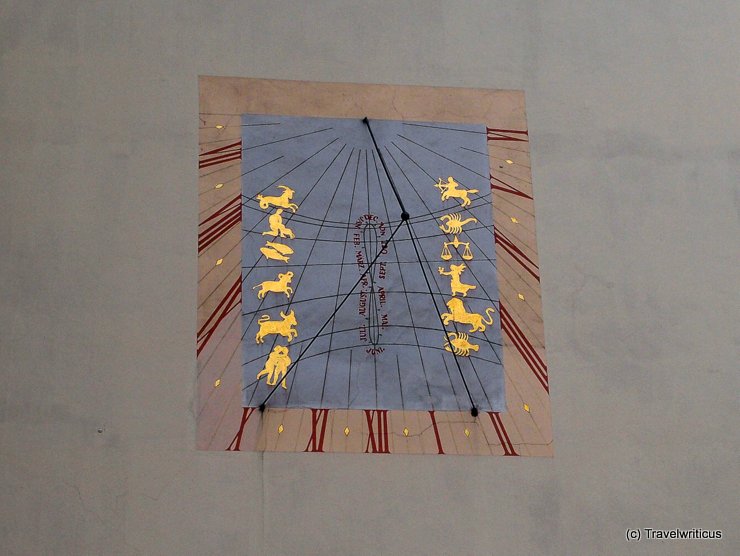
The Zwehrenturm, standing next to the Fridericianum in Kassel, is a remnant of the old town fortifications. A sundial with multiple hour lines, dating back to the 18th century, adds a colourful touch to the white tower. Its golden symbols represent the zodiacs.
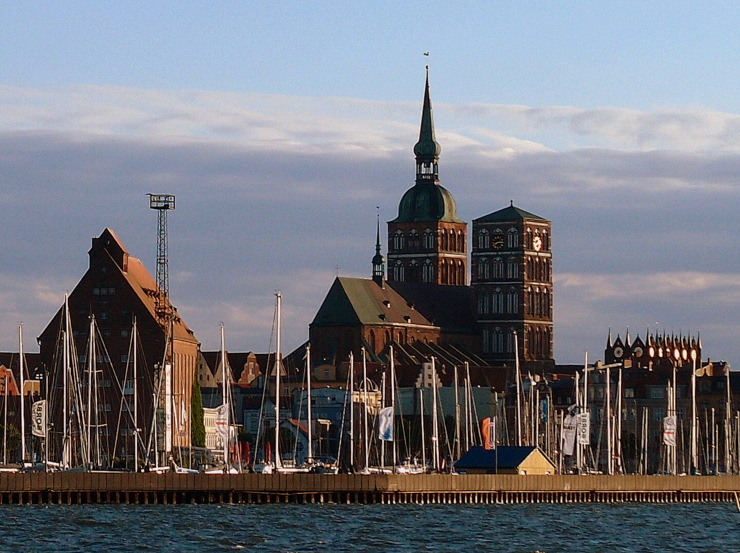
St. Nicholas Church (Nikolaikirche) in Stralsund is known for its different roofs on its towers. Only the southern tower is covered with a Baroque roof; the other tower has a nearly flat one. Another worth-seeing attraction is the astronomical clock inside.
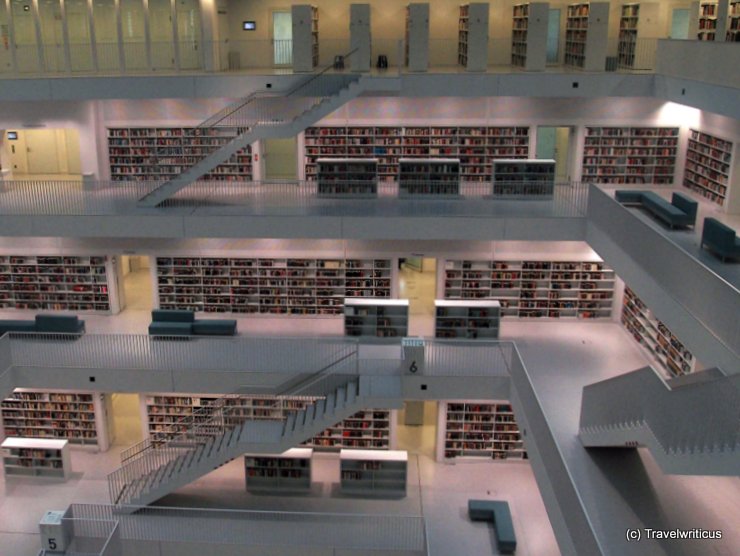
The current municipal library (Stadtbibliothek) of Stuttgart was opened in 2011. Lovers of endless bookshelves find this remarkable interior, designed by Korean architect Eun Young Yi, at the Mailänder Platz.
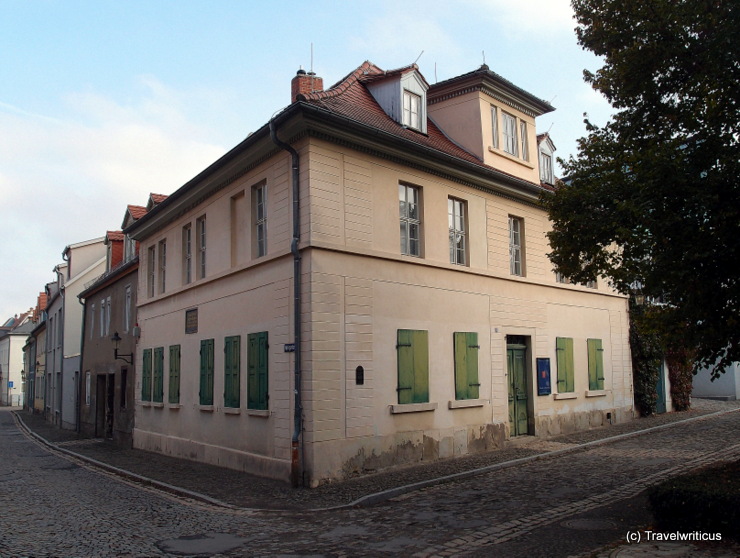
The Nietzsche-Haus museum opened in 1994. A permanent exhibition is devoted to the life and work of the philosopher Friedrich Nietzsche. The Nietzsche Documentation Centre, also housed here, is concerned with researching the reception of Nietzsche’s works.