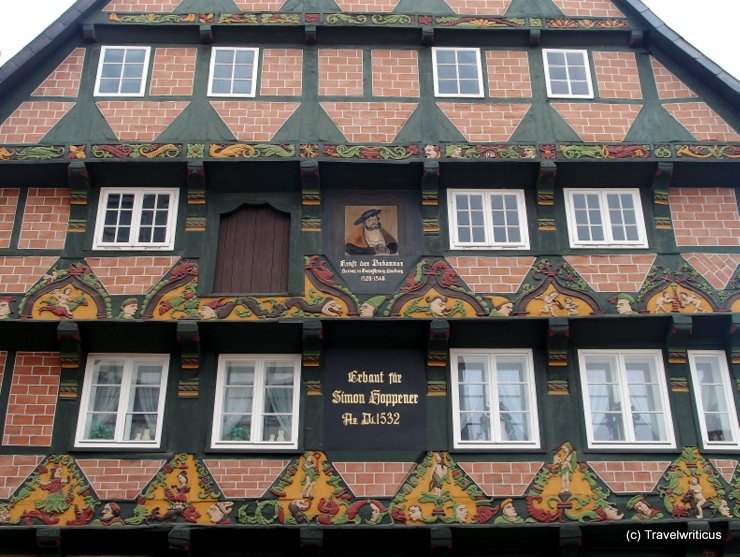
The Hoppener Haus (Hoppener House) saw its construction in 1532. Its name originates from the citizen Simon Hoppener. He worked as Amtschreiber (scribe) and Rentmeister (treasurer) for the Duchy of Brunswick-Lüneburg in 16th century.
Browse through your travel destination!
The Hoppener Haus (Hoppener House) saw its construction in 1532. Its name originates from the citizen Simon Hoppener. He worked as Amtschreiber (scribe) and Rentmeister (treasurer) for the Duchy of Brunswick-Lüneburg in 16th century.
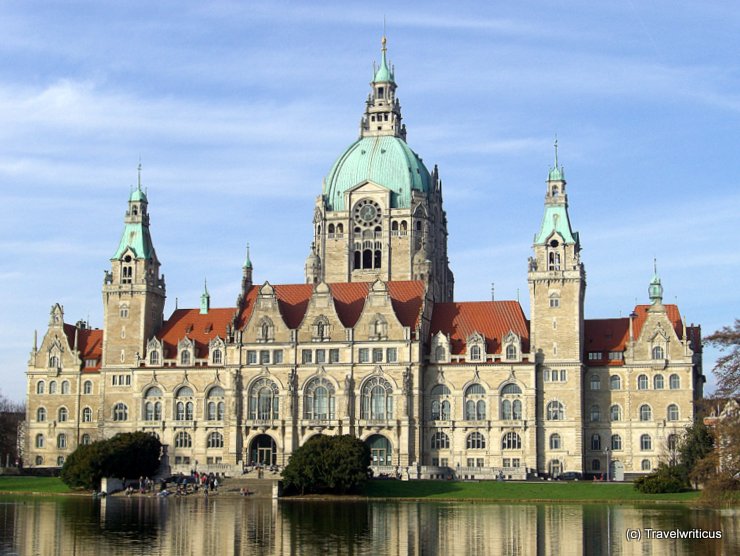
The New Town Hall (Neues Rathaus) of Hanover (Hannover) saw its construction during the era of Wilhelm II in an eclectic style. It opened in 1913. The observation deck in the dome is accessible via a remarkable elevator.
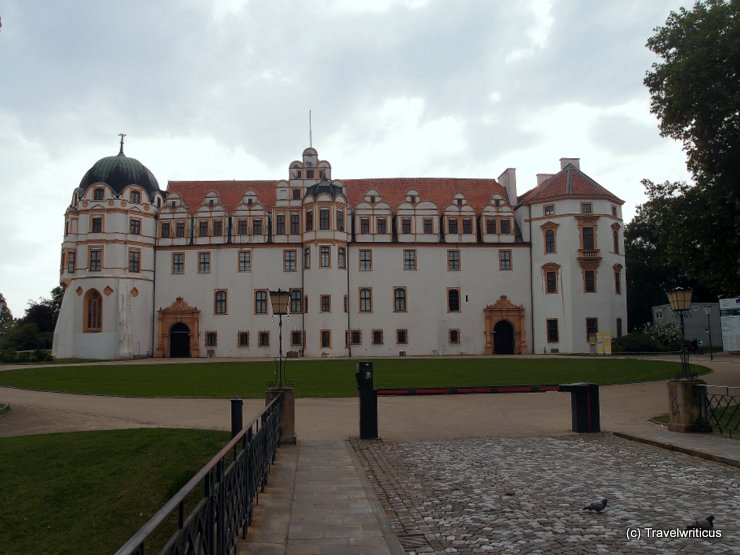
Schloss Celle in Lower Saxony blends Renaissance and Baroque styles, evolving from a 13th-century fortress into a Brunswick-Lüneburg residence. Visitors can explore the Residenzmuseum, chapel, and theatre, reflecting over 700 years of cultural history.
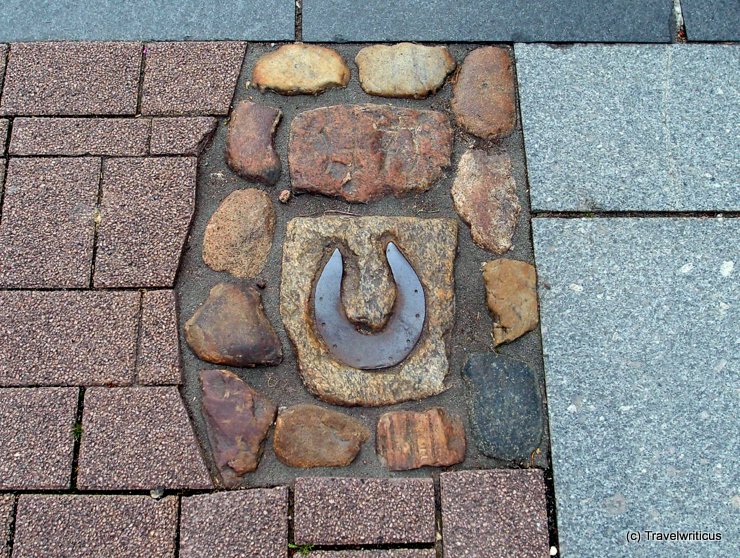
A horseshoe on the Stechbahn in Celle indicates the death place of Otto V, Duke of Brunswick-Lüneburg. He died during a tournament right on this very spot. Well, this detail in the streets of Celle proves that a horseshoe does not always symbolise luck.
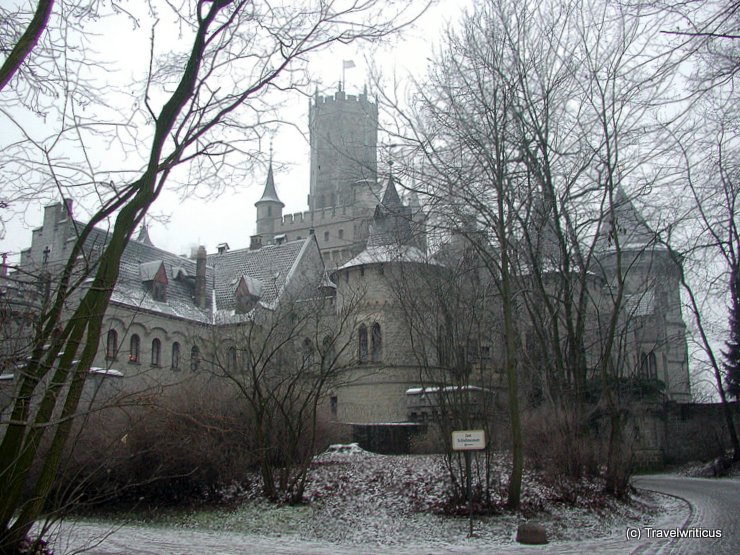
Marienburg Castle (Schloss Marienburg) saw its completion in 1867 and was a birthday present by King George V of Hanover to his wife, Marie of Saxe-Altenburg. You find the Gothic revival castle 20 km south of Hanover.
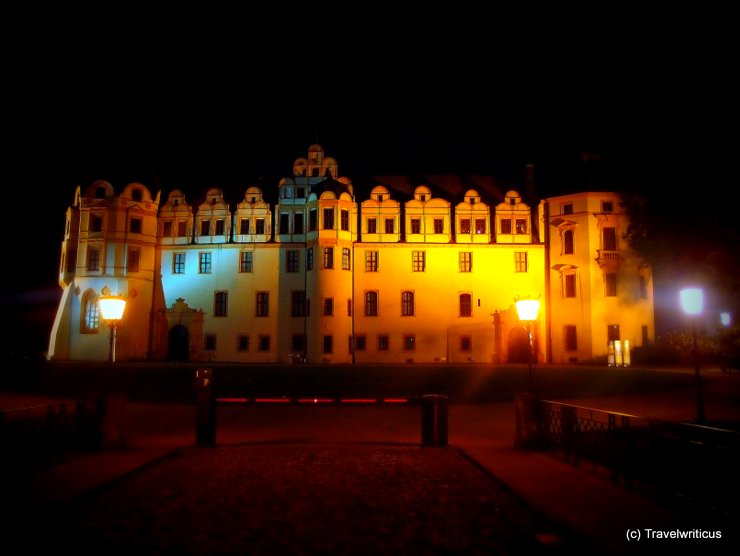
On the way back to my hotel I passed the palace of Celle (Schloss Celle) again. Sometimes a walk around a castle at night is even more exciting than in the dayligt. Especially if you are alone in the streets. What about your experiences?
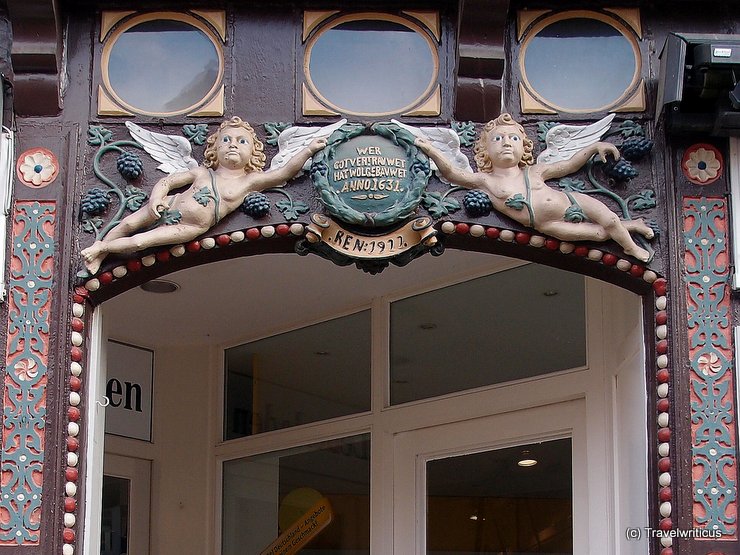
Another different style of portal. The inscription dated with 1631 gives me an interesting insight in the German of the 17th century: ‘Wer Got vetrauwet hat wolgebauwet’. Today we would write: ‘Wer Gott vertraut hat wohl gebaut’.
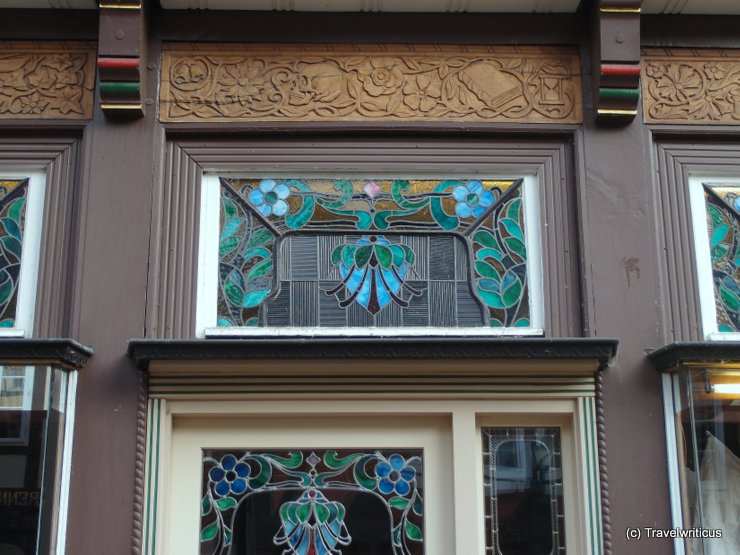
Nice decorated fanlight seen at a half-timbered house in Celle. I am not sure about the style. It seems to be not much older than 100 year? What do you think?
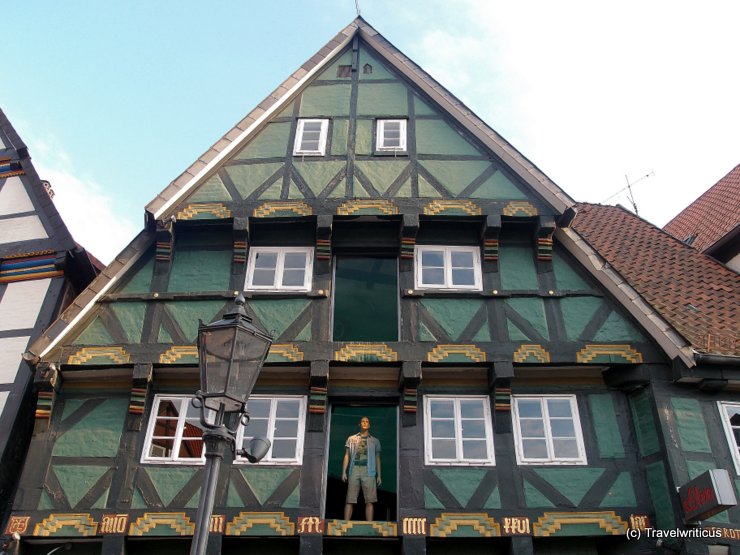
This building is supposed to be the oldest dated house (1522) in Celle. The mannequin indicates that some parts of the building are used for a fashion shop now.
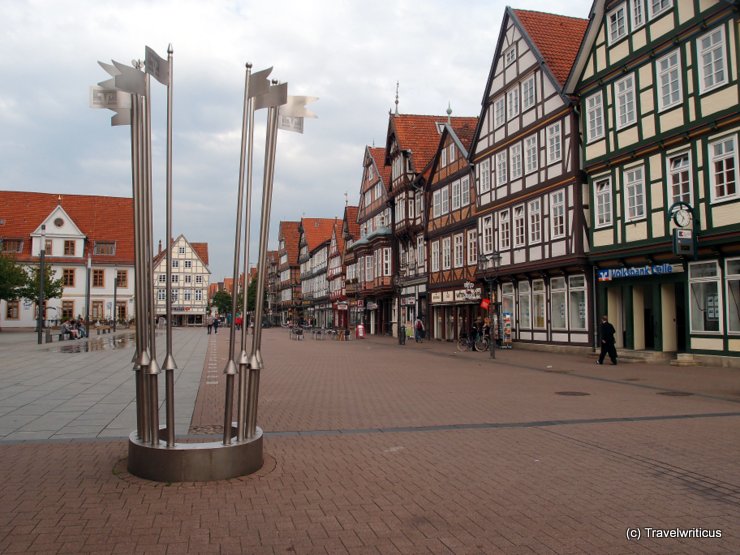
At the ‘Stechbahn’ of Celle. The former jousting field of the city was placed here. Though the sculpture is a kind of advertisement for a local bank I love the idea to portray the former use of this place by lances.
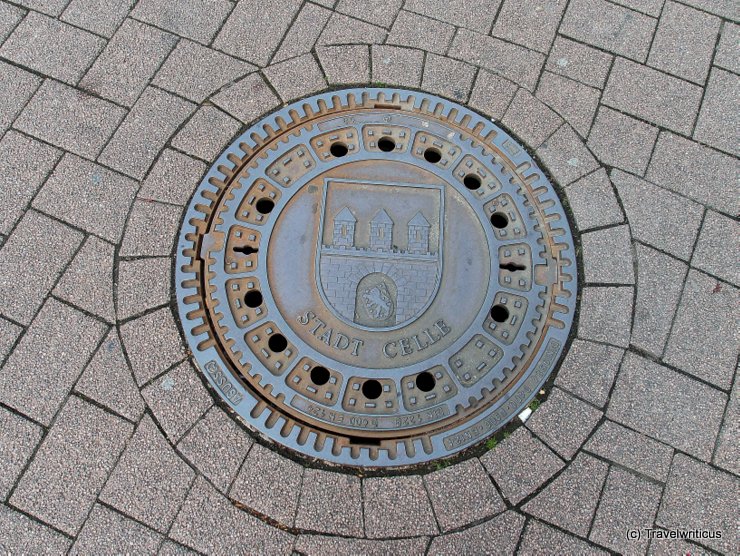
The manhole cover of Celle shows the emblem of the city: A wall with three towers. In the gate there is a blue lion surrounded by seven red hearts.
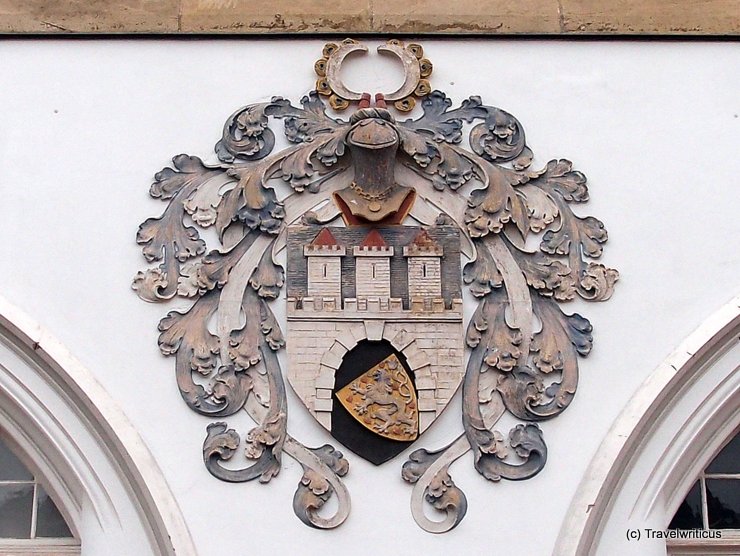
The emblem of Celle seen at the wall of the Bomann-Museum. Well, who of you can ‘read’ this emblem?